The Crack My If Can Street Challenge #3 was a fairly straight-forward "extract hashes and start cracking" problem. The hashes were Salted SHA1 inside a Berkeley DB. You could certainly have played with getting db_dump to work but it's just faster to use strings.
Sunday, August 11, 2013


Crack Me If You Can 2013 - Challenge 9: Part 1
I again had some fun this year playing KoreLogic's Crack Me If You Can password cracking contest at DEFCON 21. This year they separated teams between "Pros" and "Street" to make things a little more fair for individual users vs large groups. If you have any interest in password cracking then you can still download all the past 4 years of data and crack away! Huge thanks to the KoreLogic guys for putting on an excellent contest!
Of course my biggest problem is that by playing the game you don't get to really attend DEFCON so I didn't spend a lot of time cracking. You can tell my submissions were pretty much few and far between when I was back in my hotel room:
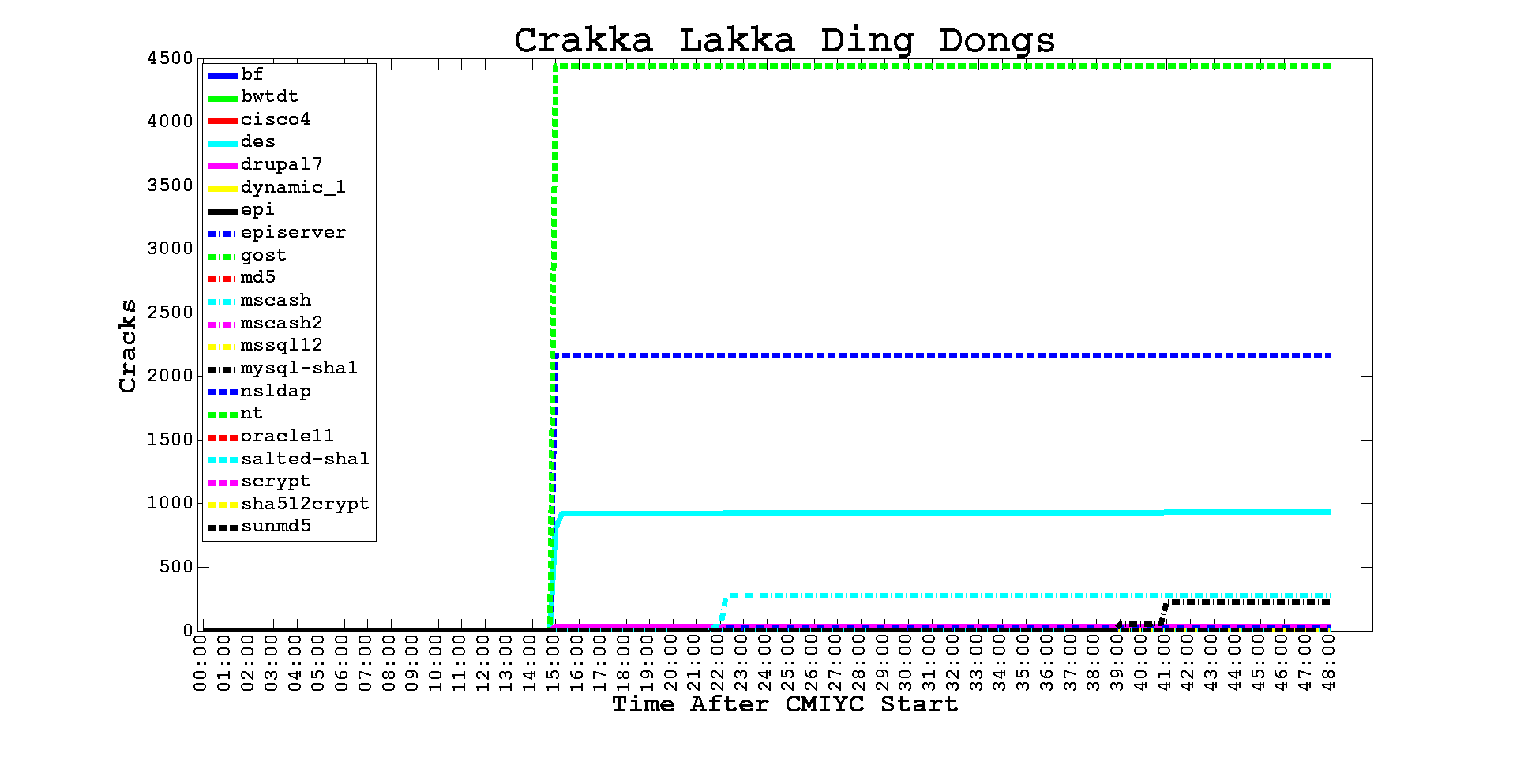 Even so I came in third place mostly because I spent a little extra time on Challenge 9 because of the point value - 250,000 points!
http://contest-2013.korelogic.com/stats_types.html:

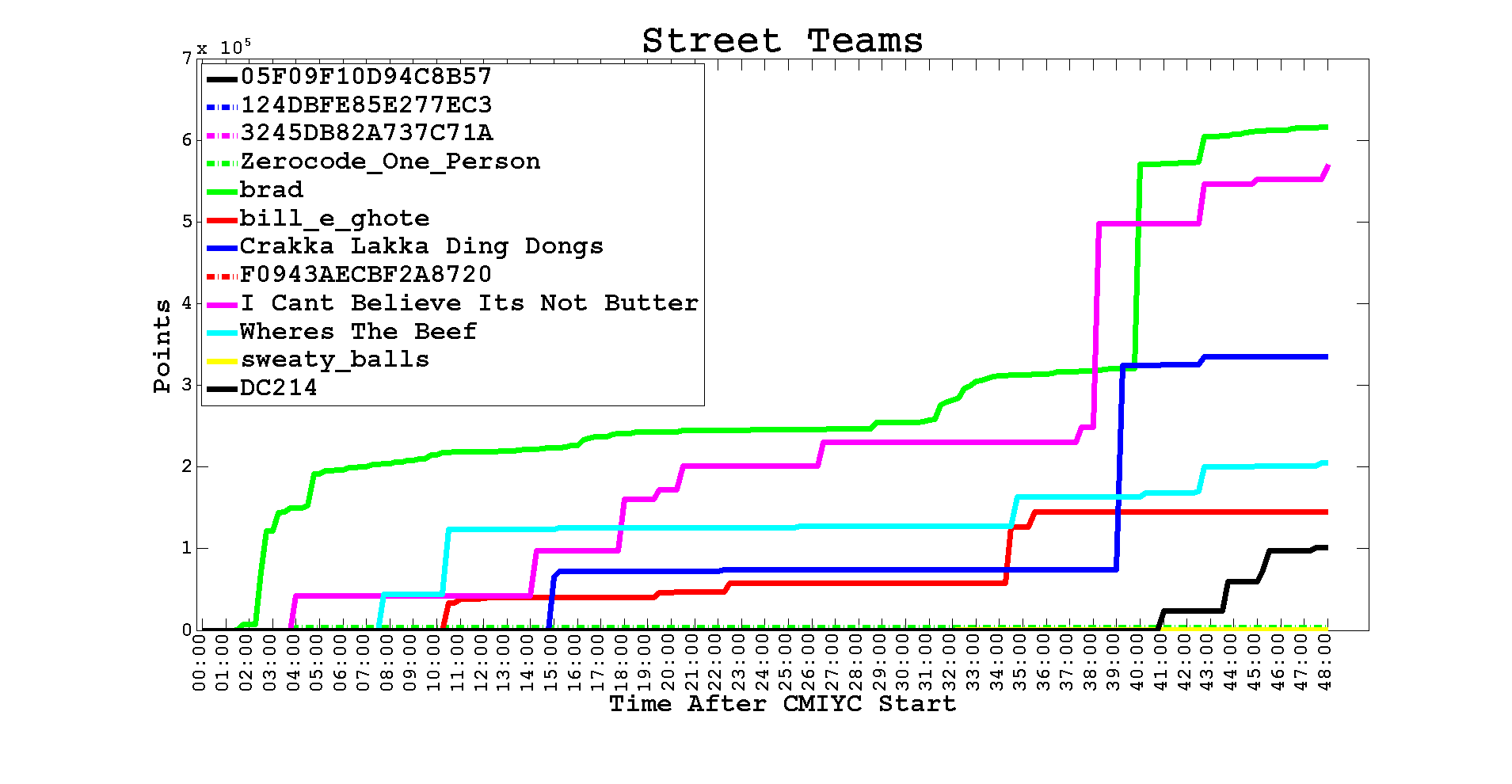 As you can tell from the graph the scores for three of us (brad, I Cant Believe Its Not Butter, and me) jumped near the final few hours of the contest because of Challenge 9. Here's how I did it...
Of course my biggest problem is that by playing the game you don't get to really attend DEFCON so I didn't spend a lot of time cracking. You can tell my submissions were pretty much few and far between when I was back in my hotel room:
http://contest-2013.korelogic.com/stats_types.html:

Wednesday, November 14, 2012
Huawei Security Advisory released for SNMP
For those keeping track, Huawei has released their advisory and work-around for affected devices.
http://support.huawei.com/support/pages/news/NewsInfoAction.do?actionFlag=view&doc_id=IN0000054930&colID=ROOTENWEB%7CCO0000000170
http://support.huawei.com/support/pages/news/NewsInfoAction.do?actionFlag=view&doc_id=IN0000054930&colID=ROOTENWEB%7CCO0000000170
Wednesday, October 24, 2012
Crack All The Hashes!
Crack All The Hashes!
A few months back I was having a discussion with a co-worker about how to effectively crack a large PWDUMP file (thousands and thousands of users and hashes). I have a bunch of manual steps I use to churn through John the Ripper, oclHashcat and Rainbowcrack that I shared. Then I asked myself, "wtf, why not make a shell script instead?"
When mubix mentioned lm2ntlm patches to JtR for helping to crack from LANMAN to NTLM I remembered that I never fully wrote up anything here about the script. Soo... here's the script!
Fork it, fix it, do whatever you want with it from https://gist.github.com/3416932
Execution is fairly straight forward. Hopefully I didn't make any glaring security holes when processing PWDUMP files. Use all your favorite precautions before or while running this.
Fork it, fix it, do whatever you want with it from https://gist.github.com/3416932
Execution is fairly straight forward. Hopefully I didn't make any glaring security holes when processing PWDUMP files. Use all your favorite precautions before or while running this.
Tuesday, October 23, 2012
HP/H3C and Huawei SNMP Weak Access to Critical Data
HP/H3C and Huawei SNMP Weak Access to Critical Data
Overview
HP/H3C and Huawei networking equipment suffers from a serious weakness in regards to their handling of Systems Network Management Protocol (SNMP) requests for protected h3c-user.mib and hh3c-user.mib objects.
Identifiers
- US-CERT VU#225404
- CVE-2012-3268
Vendor releases
Huawei EBG:
Huawei CBG:
Researcher
Kurt Grutzmacher
grutz <at> jingojango dot net
twitter: @grutz
Details
Huawei/H3C have two OIDs, 'old' and 'new':
- old: 1.3.6.1.4.1.2011.10
- new: 1.3.6.1.4.1.25506
Most devices support both formats.
The MIBs h3c-user.mib and hh3c-user.mib, for the purpose of this document, will be referred to as (h)h3c-user.mib. This MIB defines the internal table and objects to "Manage configuration and Monitor running state for userlog feature."
This means there are some cool objects with data in this MIB penetration testers or malicious actors would want to get their dirty little hands on. Most objects are only accessible with the read/write community string.
In the revision history of (h)h3c-user.mib, version 2.0 modified the MAX-ACCESS from read-only to read-create the following objects within the (h)h3cUserInfoEntry sequence:
- (h)h3cUserName
- (h)h3cUserPassword
- (h)h3cAuthMode
- (h)h3cUserLevel
The purpose of these objects are to provide the locally configured users to those with a valid SNMP community. After the change only those with the read-write community string should have access, however this was not the case and the code still retained the earlier access of read-only.
So if you have the SNMP public community string then you have the ability to view these entries.
Why this is impactful
The (h)h3cUserPassword is presented in one of three formats as defined in the (h)h3cAuthMode object and mirrors how passwords are stored in the device configuration:
- 0 -- password simple, meaning cleartext
- 7 -- password cipher, meaning ciphertext
- 9 -- password sha-256, meaning one-way sha-256 hash
SHA-256 is a recent addition and is not supported on all devices yet.
On top of this the (h)h3cUserLevel can be 0 to 3 where 0 is limited access and 3 is full access.
Globbing some users
You must have an SNMP read-only or read-write string and access to the
SNMP port (udp/161) for this to work:
$ snmpwalk –c public –v 1 $IP 1.3.6.1.4.1.2011.10.2.12.1.1.1
or
$ snmpwalk –c public –v 1 $IP 1.3.6.1.4.1.25506.2.12.1.1.1
Weaponizing
Files relevant to this disclosure:
- hh3c-localuser-enum.rb - Metasploit auxiliary scanner module
- snmp-h3c-login.nse - Nmap Scripting Engine module
These will soon be posted to https://github.com/grutz/h3c-pt-tools and requested to be added to each tool.
Mitigation
By itself this is already bad but most users who do any of the following may already be protected:
- Use complex SNMP community strings or disable SNMPv1
- Have disabled the mib entries for (h)h3c-user
- Block SNMP using access controls or firewalls
- Do not define local users, use RADIUS or TACACS+
More specific routines can be found in the vendor's release.
Why this is a bigger problem
People make poor choices. They like to think their equipment won't rat them out so they use cleartext passwords on networking equipment.
The cipher is an interesting one because it's basically an unknown... What, you think the only thing I had to share at Toorcon was SNMP and some cleartext credentials?
Timeline
June-ish 2012: Research begins after seeing something cool on a penetration test
August 6, 2012: Contacted US-CERT to coordinate vendor disclosure, VU#225404
September 5, 2012: No response from H3C, contacted US-CERT again
September 6, 2012: H3C (through US-CERT) requests more time, I state intention to present findings at Toorcon (Oct 19/20, 2012) or disclose if talk not accepted.
September 18, 2012: Approved for Toorcon! Information goes up not long after on Toorcon website.
September 18-October 16, 2012: Build slides, work on tools, no contact with US-CERT or vendors.
October 16, 2012: HP contacts me directly asking that I not present this information at Toorcon
October 18, 2012: Publicly state agreement to cancel the Toorcon talk
October 22, 2012: HP discloses! What what? Why bother putting any pressure not to give the talk if you're gonna give everything out 2 days later?
October 23, 2012: So I publish.
Thursday, October 18, 2012
On HP/H3C and Schrödinger's Disclosure
Background and Timeline
Whew! The past two days have been a whirlwind of activity and I wanted to get this down before things got too crazy or out of hand.This weekend I had planned to be at Toorcon 14, my favorite security conference hands down, with a presentation entitled "A CouNtry's Honerable n3twork deviCes". The abstract:
Thanks to FX you can now use buffer overflows on Huawei routers. Buffer overflows are cool but there are issues you have to overcome. What if there was another path which looked more like regular traffic? This talk will release details of research done in parallel to FX's against H3C/HP routers, switches, access points and firewalls. Some stats of affected Internet-accessible devices will be thrown about and updates released to Metasploit to help audit your own network. After this talk you just might be able to control a large part of the Internet in a very large CouNtry.It's a culmination of research I've been doing since June, 2012 into H3C gear with stats I (and others) have collected. On August 6, not long after FX's DEFCON talk, I submitted what I had to US-CERT for them to coordinate with HP/H3C. Standard US-CERT disclosure policy is 45 days from vendor notification. Unless the vendor asks and all agree to extend this.
30 days later I had not heard back from US-CERT or HP/H3C so I requested an update. At this time HP/H3C requested more time at which I said "ok, you can have until Toorcon. I'm going to submit to talk and even if not selected I want to disclose this."
All research and prep work for this talk was done as an individual researcher and not as part of any company. I had decided to go through US-CERT since I agree with their disclosure policy and felt this was something big and should be known and handled by them. They have a lot of experience and contacts to handle this. It's not that my employer's team isn't good, they're freaking awesome, I just didn't want to get them involved. Unfortunately.....
Then Comes Tuesday..
I received a very cordial and apologetic voicemail and e-mail from the HP Software Security Response Team asking me not to present this Saturday. The vulnerabilities are apparently too big for them to be ready. I had clearly stated back in September my intention to provide mitigation techniques so that their customers would not be left in the dark after the presentation was done. I'm not a bad person, really.. Honest!While this was understood they still felt the information was too much of a risk and again requested I delay the talk until they could be ready.
I'm guessing somebody woke up on Tuesday morning and went "Oh hell, is Toorcon this Saturday?" but you can speculate as you see fit. I can't stop you.
Some dates were floated around. HP understands the urgency and also knows that ZDI, their own disclosure group, has a 6 month policy to "disclose no matter what." So the information will come out, just not right now by me or US-CERT.
Others strongly suggested to me that I agree with this delay. If you're familiar with the 7-layer OSI stack (similar to but not exactly like the 7-layer Taco Bell burrito) then you know there are 2 additional layers atop it. Politics and Money.
Feel free to speculate as you see fit. I can't stop you.
So Are You At Risk?
If you own and use H3C or Huawei equipment then of course you are. I have information of serious vulnerabilities and you don't. Nanny nanny boo boo. But I believe in Full and Responsible disclosure, which is why I went through US-CERT. It's just that this information has serious industry-wide implications that HP isn't ready to release.Can others figure out what I know? Certainly they could. Am I going to tell anyone or give hints? No, I cannot. There is this bag with an angry cat in it that wants to come out. Or it may not be a cat. It's Schrödinger's Disclosure! You just won't know until it's opened.
This is what's tough about Full and Responsible Disclosure and why you should listen when dates and intentions are stated.
If you own and use H3C or Huawei equipment then you already know you're at a serious risk thanks to FX's DEFCON talk. If you value your network and its data then you should already have taken steps to protect it. These protections will most likely keep you safe from me as well.
However I know there are guys and girls out there that can find the same stuff I did. Please be respectful of me and HP by not talking about it if you do. Do feel free to talk to me and we'll commisurate together over our shared information.
Contacting HP
If you have any questions in relation to this case, I encourage you to contact HP's PR contact Samantha Singh
Disclaimer
The content herein consists of my own personal opinions and not those of my employer.
Tuesday, August 09, 2011
The contest is over
Korelogic's Crack Me If You Can contest at Defcon is officially over. Team Not Appearing At Defcon scored decently given it was just me, two machines and not a lot of focused time.
The top teams scores fully show that given enough resources and dedication today's password hashes can and will be broken. Congrats to the top four teams: Hashcat, InsidePro, john-users and bindshell-dot-nl. Reading your write-ups will be fun!
I had a few goals I wanted to achieve while participating in the contest. I knew I wouldn't score high or often due to outside commitments. I mostly wanted to:
I look forward to next year's contest and the overall report!
The top teams scores fully show that given enough resources and dedication today's password hashes can and will be broken. Congrats to the top four teams: Hashcat, InsidePro, john-users and bindshell-dot-nl. Reading your write-ups will be fun!
I had a few goals I wanted to achieve while participating in the contest. I knew I wouldn't score high or often due to outside commitments. I mostly wanted to:
- Stretch out the environment we had built up for penetration tests
- Try not to get sucked into trying for bigger scoring points and see how many overall hash types respond in the environment (failing sometimes to stick to this rule - damn competitive natures!)
- Gain more experience with Hashcat's tools and closing some of my knowledge gaps with it
- More real-world experience with using John The Ripper's modes.
- In a real world penetration test you typically receive bundles of hashes at a time. Usually a few Windows systems with local administrator and one or two potentially useful accounts. Then as the days progress you start owning larger and larger systems with more and more passwords (mssql, oracle, windows servers, etc). I'm not really sure how they could incorporate that into a 48 hour contest but it would be cool.
- Individuals are severely outclassed by teams, but that's entirely ok. The contest was designed as a team-based system. Obviously those who had the resources to work together and develop their own tools have a huge step-up. The top three teams represented three different cracking toolsets.
- The mssql/mssql05 debacle was annoying but glad it was cleared up. The problem with mssql hashes is that they crack in both formats so you really need to know your source. I had achieved a high number of mssql05 hashes but when they didn't point score I switched to mssql, which was incorrect. Quite a bit of wasted CPU time.
- For those of us who are not hard-core shellcoders, this gave us something fun to play as part of Defcon instead of having our asses handed to us at CTF. The downside still is if you're at Defcon and you're in a contest you don't really get to enjoy Defcon. :)
- The challenges were a nice touch - zip, pdf, rar and doc files with extra hashes in them to crack! I wasn't expecting them so I didn't spend too many cycles on them. Something to note for our environment...
- A lot of hard work went into making this contest and from my vantage point it seemed to run pretty smoothly. Kudos to Korelogic!
- Separating the hashes into their respective files was really helpful for writing scripts. Saved a bunch of time compared to the prior year's huge textfile of hashes.
- The contest wasn't just about brute force strength, however having an arsenal of systems/people or an amazing GPU coder in your pocket helps. I heard that atom, the main coder for hashcat, wrote a GPU implementation of mscash2 in 8 hours. A serious leg up against everyone else given 16,000 points per DCC2 crack.
- Wordlists helped but spotting patterns early on and adapting helped, as expected. A system I wasn't really able to exploit due to limited personal time.
I look forward to next year's contest and the overall report!
Saturday, August 06, 2011
Day 1 wrap-up, Crack me if you can
Until I finalise my thoughts more this will probably be the last update for the contest. It's pretty clear that one person with a few small resources can't crack as fast as an army of people that may or may not have a mega-setup at their disposal.
I don't think I scored too poorly given that I was an individual with two systems at my disposal. I've learned a lot and that will help in the long run.
The contest this year includes some heavy point-setting password protected zip, rar and word documents. I'm sure they are some permutation of already cracked passwords, maybe I'll get to those later. There are too many things to do at once for this contest that you really need to put together a good team.
My score so far?
I really should have more single points up there but it's such a decision battle. Spend the cycles cracking some of the slower, higher point hashes or blast through the faster, lower point ones. Oh well, will pick up more cracking tomorrow if time permits, and it probably won't.
I don't think I scored too poorly given that I was an individual with two systems at my disposal. I've learned a lot and that will help in the long run.
The contest this year includes some heavy point-setting password protected zip, rar and word documents. I'm sure they are some permutation of already cracked passwords, maybe I'll get to those later. There are too many things to do at once for this contest that you really need to put together a good team.
My score so far?
| 80199 | 16094 | EC952A038CB3ECB4 | not appearing at defcon |
| not appearing at defcon |
| points | cracks | value | hashname |
|---|---|---|---|
| 5000 | 1 | 5000 | bf |
| 5000 | 5 | 1000 | md5 |
| 200 | 1 | 200 | bsdi |
| 13662 | 759 | 18 | raw-sha512 |
| 11640 | 776 | 15 | mysql-sha1 |
| 7813 | 601 | 13 | md5_gen(23) |
| 6492 | 541 | 12 | md5_gen(22) |
| 8200 | 820 | 10 | des |
| 176 | 22 | 8 | md5_gen(12) |
| 280 | 40 | 7 | oracle11 |
| 469 | 67 | 7 | mssql |
| 343 | 49 | 7 | ssha |
| 636 | 106 | 6 | md5_gen(16) |
| 7476 | 1246 | 6 | raw-sha1 |
| 2628 | 876 | 3 | phps |
| 4221 | 4221 | 1 | md5_gen(0) |
| 5963 | 5963 | 1 | nt |
I really should have more single points up there but it's such a decision battle. Spend the cycles cracking some of the slower, higher point hashes or blast through the faster, lower point ones. Oh well, will pick up more cracking tomorrow if time permits, and it probably won't.
Friday, August 05, 2011
Holy crap, one against many
The scores for this year's KoreLogic Crack Me If You Can contest are up and it appears that teams with multiple people and systems have a slight advantage....
The top 4 teams:
Where am I in all of this?
That's about what I expected. I'm only one person with a small spattering of machines at my disposal. With 121,614 hashes to crack of 20 different hash types you have to be smart. Brute force will only get you so far and so far that's mostly what I've been doing: finding the commonality amongst the easy-to-crack so, time permitting, the bigger scoring hashes can be cracked.
Honestly I only have a few hours of free time left so I'll probably pick a few high scoring hash types and let the permutation of the wordlist run for a bit.
The top 4 teams:
74766 8D65BF65887D65A9 Hashcat
50155 CCDE2FAB9599C0A6 Insidepro team 2011
45187 7D47E99A316E29D7 john-users
24687 889DCCAD7B08FD12 bindshell-dot-nl
Where am I in all of this?
4447 EC952A038CB3ECB4
That's about what I expected. I'm only one person with a small spattering of machines at my disposal. With 121,614 hashes to crack of 20 different hash types you have to be smart. Brute force will only get you so far and so far that's mostly what I've been doing: finding the commonality amongst the easy-to-crack so, time permitting, the bigger scoring hashes can be cracked.
Honestly I only have a few hours of free time left so I'll probably pick a few high scoring hash types and let the permutation of the wordlist run for a bit.
KoreLogic 2011 Crack Me If You Can
Due to a lot of family-type things happening around the BlackHat/Defcon/CCC dates I have been unable to attend. Usually it's work that precludes the "having fun in 120 degree Las Vegas weather."
Thankfully KoreLogic has given non-attendees the chance to play in their "Crack Me If You Can" game for Defcon! Hooray! 48 hours of unadulterated power consuming, hash generating, text file management, pgp encrypting and general usage of unused computing cycles!
This year I decided to devote a few hours to this contest while the wife and baby sleep. I'll be writing some updates as I get some time on how things are going. It's now been a little over an hour since I started so here's where things stand.
On Your Mark
Pre-registration involved generating a PGP key (if you didn't already have one) and sending it off to KoreLogic's scoring server for verification. This was easy if you've spent any time doing encrypted communication exchanges.
Get Set
While I waited for the contest to start I made sure I had all my tools and systems ready. This would be the chance to help prove out the expenditure of NVidia GTX580 cards, high-end CPUs, RAID disk space, etc. Since I'm running in an even shorter timeframe (and smaller team size... of one!) early preparation was key.
Tools I planned on using:
Two hours in...
Thankfully KoreLogic has given non-attendees the chance to play in their "Crack Me If You Can" game for Defcon! Hooray! 48 hours of unadulterated power consuming, hash generating, text file management, pgp encrypting and general usage of unused computing cycles!
This year I decided to devote a few hours to this contest while the wife and baby sleep. I'll be writing some updates as I get some time on how things are going. It's now been a little over an hour since I started so here's where things stand.
On Your Mark
Pre-registration involved generating a PGP key (if you didn't already have one) and sending it off to KoreLogic's scoring server for verification. This was easy if you've spent any time doing encrypted communication exchanges.
Get Set
While I waited for the contest to start I made sure I had all my tools and systems ready. This would be the chance to help prove out the expenditure of NVidia GTX580 cards, high-end CPUs, RAID disk space, etc. Since I'm running in an even shorter timeframe (and smaller team size... of one!) early preparation was key.
Tools I planned on using:
- John the Ripper, latest jumbo patches and GPU patches if time and code permitted
- The oclHashCat suite
- Misc rainbowtables collected over the years
- Misc wordlists collected over the years
GO!
Molly wakes me up at 5:50am on Friday morning for her regular feeding... 20 minutes of extra sleep! I check my e-mail and am excited to see the encrypted contest e-mails in my inbox. A quick pgp decryption and the URLs to download are shown. Hooray!
Oops, based on the CMIYC twitter feed they had generated some weak hashes. Use the two files instead of the first one. Ok!
Down they come with wget.... Hmm, zip files. No problem! Take a peek with 'unzip -v' and the contents look pretty good. Time to get rolling...
~/korelogic-2011/test$ unzip ../2011-CrackMeIfYouCan_part1.zip
Oh. Of course it's going to be password protected. But it's pretty easy to guess if you take a step back and think about it.Archive: ../2011-CrackMeIfYouCan_part1.zipcreating: contest_tree/challenge1/[../2011-CrackMeIfYouCan_part1.zip] contest_tree/challenge1/challenge1.zip password:
Two hours in...
A long way to go still... Right now I'm basically not caring about the scoring points and going after "low-hanging passwords" using a very large dictionary, JTR's stock rules and patience. Some high scoring hashes may be cracking, I don't really know right now.. Time to feed the baby again.4066 password hashes cracked, 123780 left
Thursday, February 12, 2009
Where's grutz?
I've been very busy with a number of things and haven't been able to focus on fun things to share. Work work work work work! This year MacWorld did finally manage to fix their issue so no free platinum passes using the same, tired exploit! Squirtle has been put on the backburner for now and valentines day is right around the corner. Too bad I'm not Cupid... and I'm filled with hatred and rage!
Here's to hoping your 2009 is a great one. Happy Chinese New Year!
Here's to hoping your 2009 is a great one. Happy Chinese New Year!
Saturday, November 15, 2008
Squirtle and MS08-068
HD Moore already did some great analysis on how the MS08-068 patch affected the SMB Relay attacks within Metasploit. The answer?
You can't attack the source workstation/server if MS08-068 has been applied.
This ONLY affects Squirtle if your evil agent attempts to communicate back to the victim. It should not impact attacking their IMAP, HTTP or File/Print servers.
As always the goal of Squirtle is to permit others to extend their own tools to permit the use of authentication requests from controlled browsers and at your own time or when the right users click on your evil link!
Have fun with the latest updates and thanks to Natron for pointing me towards HD's analysis.
You can't attack the source workstation/server if MS08-068 has been applied.
This ONLY affects Squirtle if your evil agent attempts to communicate back to the victim. It should not impact attacking their IMAP, HTTP or File/Print servers.
As always the goal of Squirtle is to permit others to extend their own tools to permit the use of authentication requests from controlled browsers and at your own time or when the right users click on your evil link!
Have fun with the latest updates and thanks to Natron for pointing me towards HD's analysis.
Friday, November 14, 2008
Squirtle Updates: IMAP, Metasploit integration complete
I just gave a talk to everyone here at DeepSec 08. Other than the weather being a bit cold and wet Vienna is awesome. Everyone seems happy to be at this conference and to share and network with each other. It's always fun giving the Squirtle talk to new audiences and see their eyes light up as they start to get why this attack matters to their environments or how they could use it on a client's penetration test.
With the conclusion of this talk I'm happy to announce that two new evil agent updates have been completed!
On Nov 11th MSRC posted some information on MS08-068 implementing some changes to the NTLM protocol to neuter the SMB Relay attack and possibly (but not mentioned) Squirtle as well. I haven't had a chance to play with yet as I didn't want to possibly spoil the live demos so close to DeepSec. It's nearly time to spend the evening at Metalab so more information as it develops (I promise!)
Big thanks to everyone here at DeepSec for coordinating this one-of-kind conference. Vienna is such a beautiful place to visit, I only wish it would be earlier in the season when it's not so cold and dreary outside. I hope to come next year for DeepSec 09!
Also, look for my ugly mug to make an appearance on Help Net Security soon. It's a brief plea on using Squirtle and hopefully my excitement over reaching more people isn't too transparent. :)
With the conclusion of this talk I'm happy to announce that two new evil agent updates have been completed!
- IMAP Mirroring! Download a victim's entire IMAP directory! Use social engineering, have the help desk e-mail them a new password!
- Metasploit integration! SMB Relay an enterprise's server farm with Squirtle!
On Nov 11th MSRC posted some information on MS08-068 implementing some changes to the NTLM protocol to neuter the SMB Relay attack and possibly (but not mentioned) Squirtle as well. I haven't had a chance to play with yet as I didn't want to possibly spoil the live demos so close to DeepSec. It's nearly time to spend the evening at Metalab so more information as it develops (I promise!)
Big thanks to everyone here at DeepSec for coordinating this one-of-kind conference. Vienna is such a beautiful place to visit, I only wish it would be earlier in the season when it's not so cold and dreary outside. I hope to come next year for DeepSec 09!
Also, look for my ugly mug to make an appearance on Help Net Security soon. It's a brief plea on using Squirtle and hopefully my excitement over reaching more people isn't too transparent. :)
Tuesday, September 02, 2008
Upcoming Speaking Gigs
Tying a neat little bow to my NTLM/HTTP research I'll be presenting "One XSS to Rule The Enterprise" at ToorCon X the end of September and "NTLM SSO Weaknesses" at DeepSec in November. Both talks will show off the Squirtle Attack Toolkit. Hopefully I'll have some of the updates I didn't get into the DefCon release ready by ToorCon!
When friends ask "should I go to Defcon?" I always respond "Hey, check out ToorCon. It's in a nicer climate!" Vegas in July? Pfft, San Diego in September! One of the best conventions out there, period. Just check out the conference lineup!
When friends ask "should I go to Defcon?" I always respond "Hey, check out ToorCon. It's in a nicer climate!" Vegas in July? Pfft, San Diego in September! One of the best conventions out there, period. Just check out the conference lineup!
Tuesday, August 12, 2008
Passing The Dutchie @ Defcon 16
Like many things with this blog, I don't prioritize it above things like hanging out with my girlfriend, going to work, sleeping, breaking my iPhone, losing all my Defcon pictures, etc.
 Last weekend was Defcon 16. I had a really great time speaking to a packed house on the death of NTLM. Slides, slide video and source code to Squirtle are now available for your pleasure. I'll be doing some more work and documentation on Squirtle shortly.
A few quick changes were made to the slide deck from what was presented (and the slides on the CD are waaaaaay something different :). Mostly added NTLM Signing as a mitigation and correctly stating that JoMoKun did the Samba Pass-The-Hash modifications. Sorry!
More updates coming.
Last weekend was Defcon 16. I had a really great time speaking to a packed house on the death of NTLM. Slides, slide video and source code to Squirtle are now available for your pleasure. I'll be doing some more work and documentation on Squirtle shortly.A few quick changes were made to the slide deck from what was presented (and the slides on the CD are waaaaaay something different :). Mostly added NTLM Signing as a mitigation and correctly stating that JoMoKun did the Samba Pass-The-Hash modifications. Sorry!
More updates coming.
Thursday, August 07, 2008
NTLM is Dead: Defcon 16

Wednesday, July 30, 2008
Attacking NTLM
Defcon presentation times have been confirmed for a few weeks now and I've been slaving away at my slides and source code for a while now. I gave a pre-talk at work the other day and have decided to redo a lot of the slides. That's what you get when you ask for slides 38 days before the presentation. :)
Of course I'll have the full slides on-line after the conference but if you're coming to Defcon please come to my talk: Friday, August 8th at 2pm.
What exactly will I be talking about? Well, it's really difficult to describe succinctly but the best way I can say it is: An XSS inside your company == Total Domain Ownage.
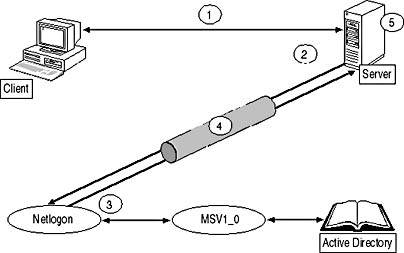
Was that a scoff I just heard under your breath? Honestly, I'm not lying here. Because of the way NTLM and Windows Single Sign-On works your run-of-the-mill cross site scripting error on an internal resource can DEVASTATE your enterprise!
Stay tuned.
Of course I'll have the full slides on-line after the conference but if you're coming to Defcon please come to my talk: Friday, August 8th at 2pm.
What exactly will I be talking about? Well, it's really difficult to describe succinctly but the best way I can say it is: An XSS inside your company == Total Domain Ownage.
Was that a scoff I just heard under your breath? Honestly, I'm not lying here. Because of the way NTLM and Windows Single Sign-On works your run-of-the-mill cross site scripting error on an internal resource can DEVASTATE your enterprise!
Stay tuned.
Friday, June 13, 2008
MS Cache and John the Ripper
Chalk this one up to knowledge remembered, forgotten, and then remembered again!
Lately I have been playing with using our MPI John the Ripper cluster to increase the crack rate of MS Cache passwords. With a very long list of passwords, some of which I knew would be easy to crack, I set out and started the process on 20 nodes. After a few days and ZERO cracks I started to wonder what the hell was going on.
The answer is one I knew many years ago when cachedump first came on the scene. The MS Cache encryption routine's salt includes the lower case username as part of the salt! Because some of the cachedump tools take the username out of the registry as-is and don't convert the case you'll run JTR for days with an invalid salt. No cracks for you!
So we can do a couple of things here:
John The Ripper's source code is really easy to fix and the quickest to do so a simple diff against mscash_fmt.c:
And now I don't have to remember this every time! JTR will remember for me and with a cluster of 20 nodes all running around 600,000 cracks a second maybe SOMETHING will crack. :)
Lately I have been playing with using our MPI John the Ripper cluster to increase the crack rate of MS Cache passwords. With a very long list of passwords, some of which I knew would be easy to crack, I set out and started the process on 20 nodes. After a few days and ZERO cracks I started to wonder what the hell was going on.
The answer is one I knew many years ago when cachedump first came on the scene. The MS Cache encryption routine's salt includes the lower case username as part of the salt! Because some of the cachedump tools take the username out of the registry as-is and don't convert the case you'll run JTR for days with an invalid salt. No cracks for you!
So we can do a couple of things here:
- Remember this next time and manually lowercase the usernames
- Tell the authors to modify the tools we use to grab the cache hashes
- Patch the tools ourselves (if we have the sources) and give them to the author
- Modify the cracking program to always lowercase the usernames
John The Ripper's source code is really easy to fix and the quickest to do so a simple diff against mscash_fmt.c:
--- mscash_fmt.c        2008-06-13 15:56:07.000000000 -0700
+++ mscash_fmt-lower.c  2008-06-13 15:55:49.000000000 -0700
@@ -16,6 +16,7 @@
  */

 #include
+#include

 #include "arch.h"
 #include "misc.h"
@@ -158,6 +159,9 @@

        l = strlen(ciphertext);
        strncpy(out, ciphertext + 2, l - PLAINTEXT_LENGTH + 1);
+        for(l=0; l < strlen(out); l++) {
+               out[l] = tolower(out[l]);
+       }
        return out;
 }
And now I don't have to remember this every time! JTR will remember for me and with a cluster of 20 nodes all running around 600,000 cracks a second maybe SOMETHING will crack. :)
Friday, June 06, 2008
NTLM, DefCon and Java!
John Heasman just posted a rocking method of obtaining NTLM hashes out of an enterprise by turning a Java applet into a web server! Check it out!
This year I'll be presenting at DefCon on the history of NTLM attacks, how they work and why we need to get rid of it. I'll release a tool that will combine as many hacks as I can get working to use captured users and their authentication tokens. There's been a lot of talk in the past few years about browser security and it's mostly hinged around using Javascript as a port scanner, sending attacks through the browser, attacking the platforms, etc. Few have been talking about an Enterprise-class risk and since that's what I get paid to think about I'm gonna blow it open. :) Come to DefCon and have a great time!
SyScan was great, a little small but helpful to bring the confidence up speaking to people who have no clue who I am! I learned quite a bit about my speaking style which helped firm up ideas about the DefCon presentation. I presented a combination of Web Security Mistakes including how to get a free MacWorld pass and spoke more about the future of PokeHashBall.
We stayed a few extra days to soak up the culture and soak the sweat into our clothes some more since this was our first trip to Hong Kong. The MongKok Computer Center was interesting but didn't seem to really have the deals I was expecting. I didn't get to any of the other computer centers however. Maybe next trip!
We went through Narita airport on the way back so I stopped at Duty Free and bought a bottle of Suntory Whiskey, the kind Bill Murray is hawking in the movie "Lost In Translation". For relaxing times, make it Santory time. . .
They have some of the greatest commercials.
This year I'll be presenting at DefCon on the history of NTLM attacks, how they work and why we need to get rid of it. I'll release a tool that will combine as many hacks as I can get working to use captured users and their authentication tokens. There's been a lot of talk in the past few years about browser security and it's mostly hinged around using Javascript as a port scanner, sending attacks through the browser, attacking the platforms, etc. Few have been talking about an Enterprise-class risk and since that's what I get paid to think about I'm gonna blow it open. :) Come to DefCon and have a great time!
SyScan was great, a little small but helpful to bring the confidence up speaking to people who have no clue who I am! I learned quite a bit about my speaking style which helped firm up ideas about the DefCon presentation. I presented a combination of Web Security Mistakes including how to get a free MacWorld pass and spoke more about the future of PokeHashBall.
We stayed a few extra days to soak up the culture and soak the sweat into our clothes some more since this was our first trip to Hong Kong. The MongKok Computer Center was interesting but didn't seem to really have the deals I was expecting. I didn't get to any of the other computer centers however. Maybe next trip!
We went through Narita airport on the way back so I stopped at Duty Free and bought a bottle of Suntory Whiskey, the kind Bill Murray is hawking in the movie "Lost In Translation". For relaxing times, make it Santory time. . .
They have some of the greatest commercials.
Monday, May 26, 2008
Heading to SyScan Hong Kong

I've been given the opportunity to talk about Web Security at this year's SyScan conference in Hong Kong. This is my first trip to Asia so I'm really really excited about it! I haven't traveled much outside of North America -- the trip to Chaos Camp was my first oceanic flight. The Pacific Ocean is so huge that our flight from SFO will total 17 hours! It was only 9 hours to Dusseldorf!
This talk will expand on my OWASP talk on trusting the client and the MacWorld Pass hack. I'll also give a brief bit on NTLM Single Signon (NTLMSSP) attacks. Looking forward and will update at the con!
Subscribe to:
Posts (Atom)